Fralveniquned
Halo Formula
Halo Formula
Couldn't load pickup availability
- ⬇️ Digital file available after purchase
- 🗂️ Long-term availability
- 🔒 Secure checkout
- 🗓️ Content updated in 2026
Self-paced learning overview
Problem Statement
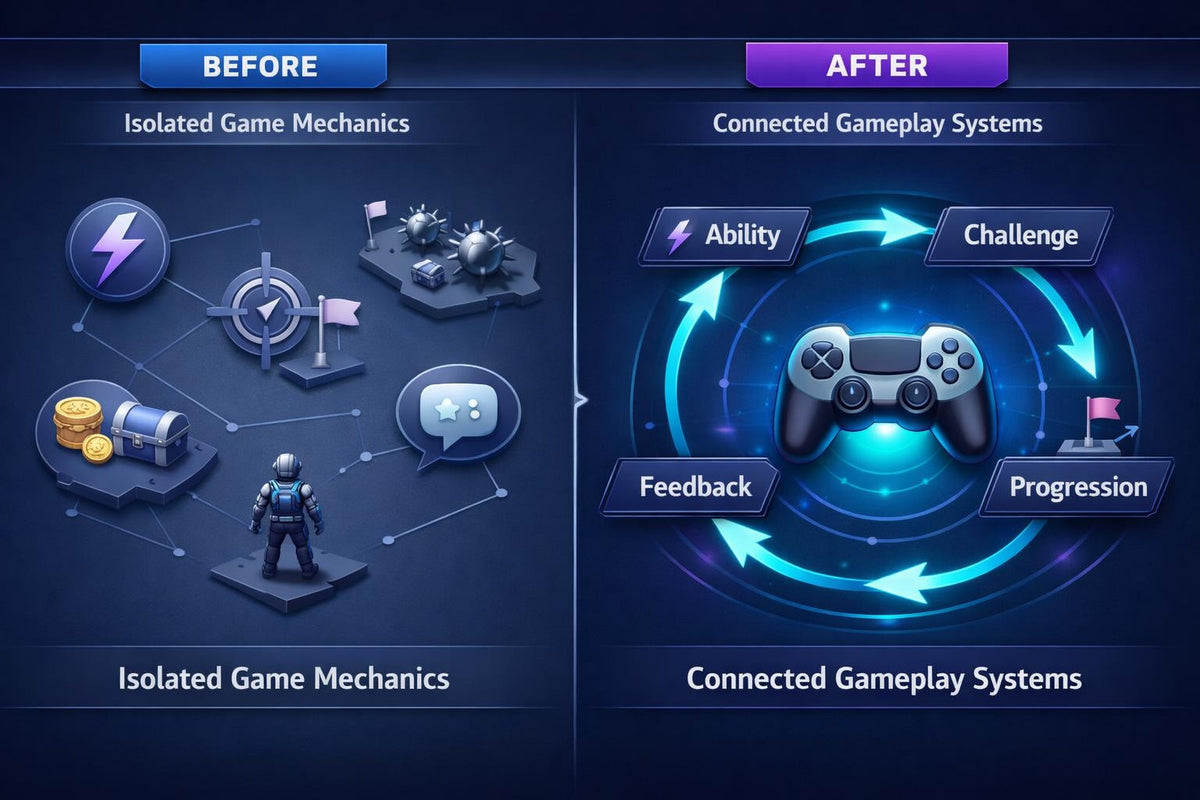
Developing individual gameplay mechanics is different from connecting them into a coherent game system. Player abilities, environmental challenges, progression rules, and feedback mechanisms must operate together. Inconsistent interactions can create confusing gameplay situations and unpredictable outcomes. Balancing difficulty and maintaining clear objectives introduce additional design considerations. Understanding these relationships requires structured analysis and practical evaluation.
Solution
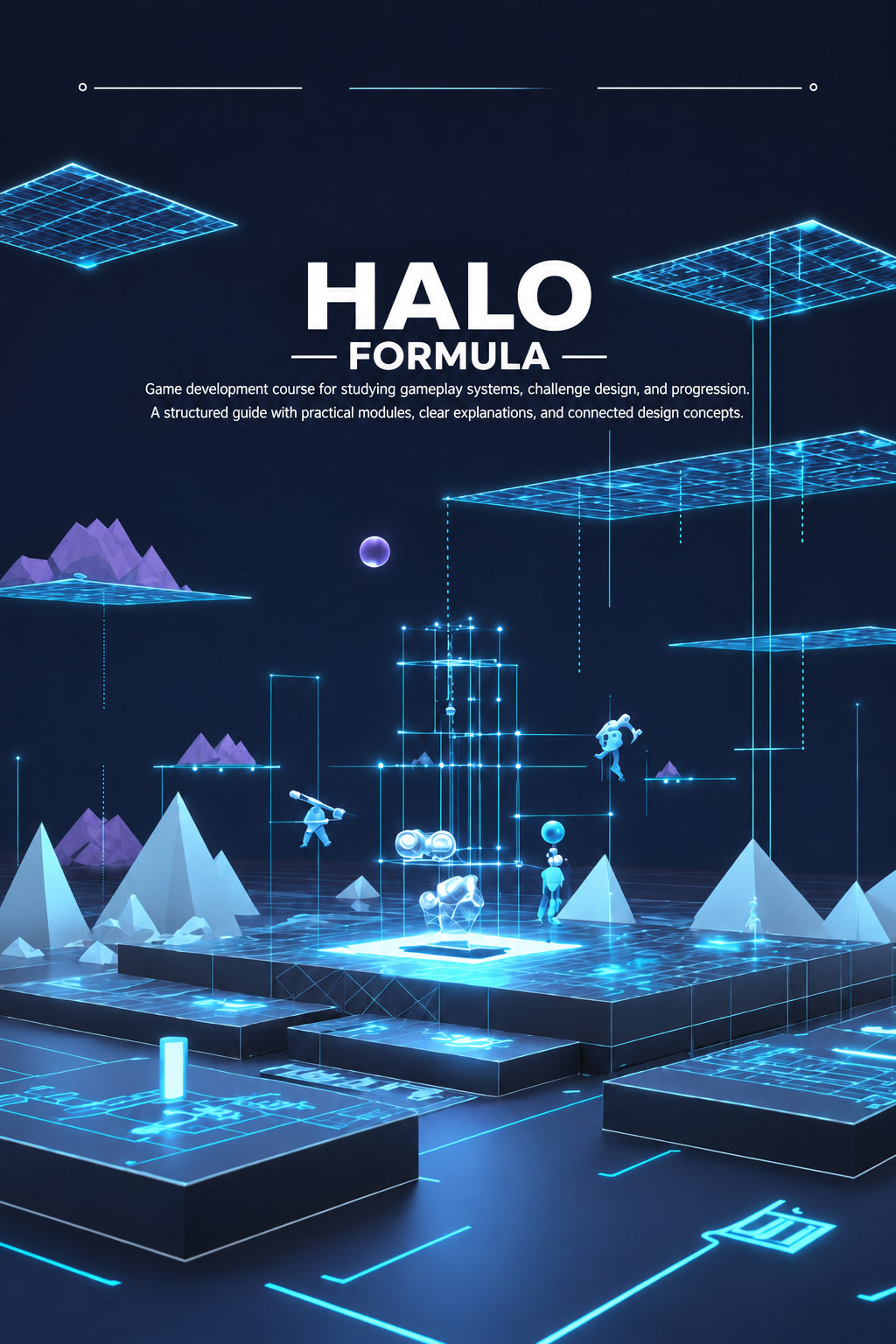
Halo Formula introduces methods for organizing gameplay mechanics into connected systems. The course examines how game rules, progression structures, and interactive challenges influence player decisions. Learners explore techniques for documenting gameplay behavior and identifying relationships between mechanics. Practical activities involve designing challenge sequences, evaluating system interactions, and adjusting gameplay parameters. Each module connects theoretical concepts with structured development exercises.
What's Inside
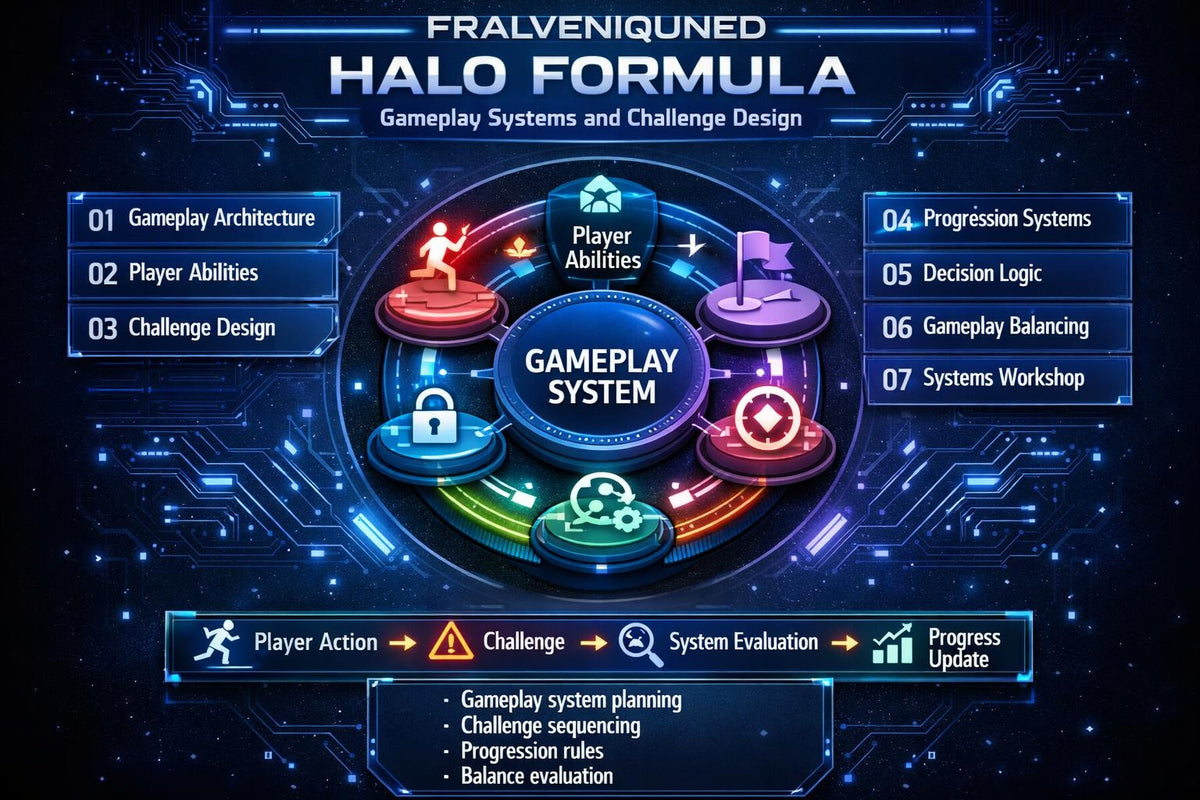
Module 1 — Gameplay Systems Architecture
Examine the organization of gameplay components, system relationships, and the principles of modular game design.
Module 2 — Player Abilities and Action Mechanics
Explore player actions, ability conditions, cooldown concepts, movement interactions, and gameplay constraints.
Module 3 — Challenge Design and Difficulty Structure
Study challenge sequencing, obstacle placement, difficulty curves, and the relationship between player abilities and environmental demands.
Module 4 — Progression and Reward Systems
Understand progression rules, objective tracking, achievement conditions, and reward feedback within gameplay loops.
Module 5 — Interactive Behavior and Decision Logic
Explore conditional interactions, behavior states, event responses, and introductory decision-making systems.
Module 6 — Gameplay Balancing and Evaluation
Study parameter adjustments, mechanic comparisons, gameplay testing scenarios, and methods for reviewing system consistency.
Module 7 — Practical Gameplay Systems Workshop
Design a connected gameplay scenario incorporating player abilities, interactive challenges, progression conditions, and feedback responses.
Who Is This For?
Halo Formula is intended for learners familiar with introductory game mechanics, interactive environments, and basic level design. It suits individuals interested in gameplay systems, challenge structures, and practical game design documentation.
What You'll Learn
- Organize connected gameplay systems.
- Define player abilities and interaction rules.
- Design structured gameplay challenges.
- Develop progression and objective-tracking concepts.
- Describe conditional gameplay behavior.
- Evaluate difficulty and gameplay balance.
- Document and review interconnected mechanics.
Guarantee
14-Day Money Back: Eligible refund requests submitted within 14 days of purchase are handled according to the store's published refund policy.
Risk-Free: Learners can review the course description, included materials, and refund conditions before purchasing. Individual learning progress depends on study and practical application.
Certification
The course includes a certificate of completion, giving learners a clear way to confirm their progress and document their participation in the educational materials.
Share
Are these courses suitable for beginners?
Are these courses suitable for beginners?
The collection includes introductory and advanced learning materials. Each tier has its own subject focus and recommended knowledge level. Learners can review the course description to determine which materials align with their current understanding and learning interests.
What topics do Fralveniquned courses cover?
What topics do Fralveniquned courses cover?
Our courses explore different areas of game development, including gameplay mechanics, interactive systems, level design, game logic, project structure, and development workflows. Each tier focuses on a defined collection of topics, combining technical explanations with practical learning activities.