Fralveniquned
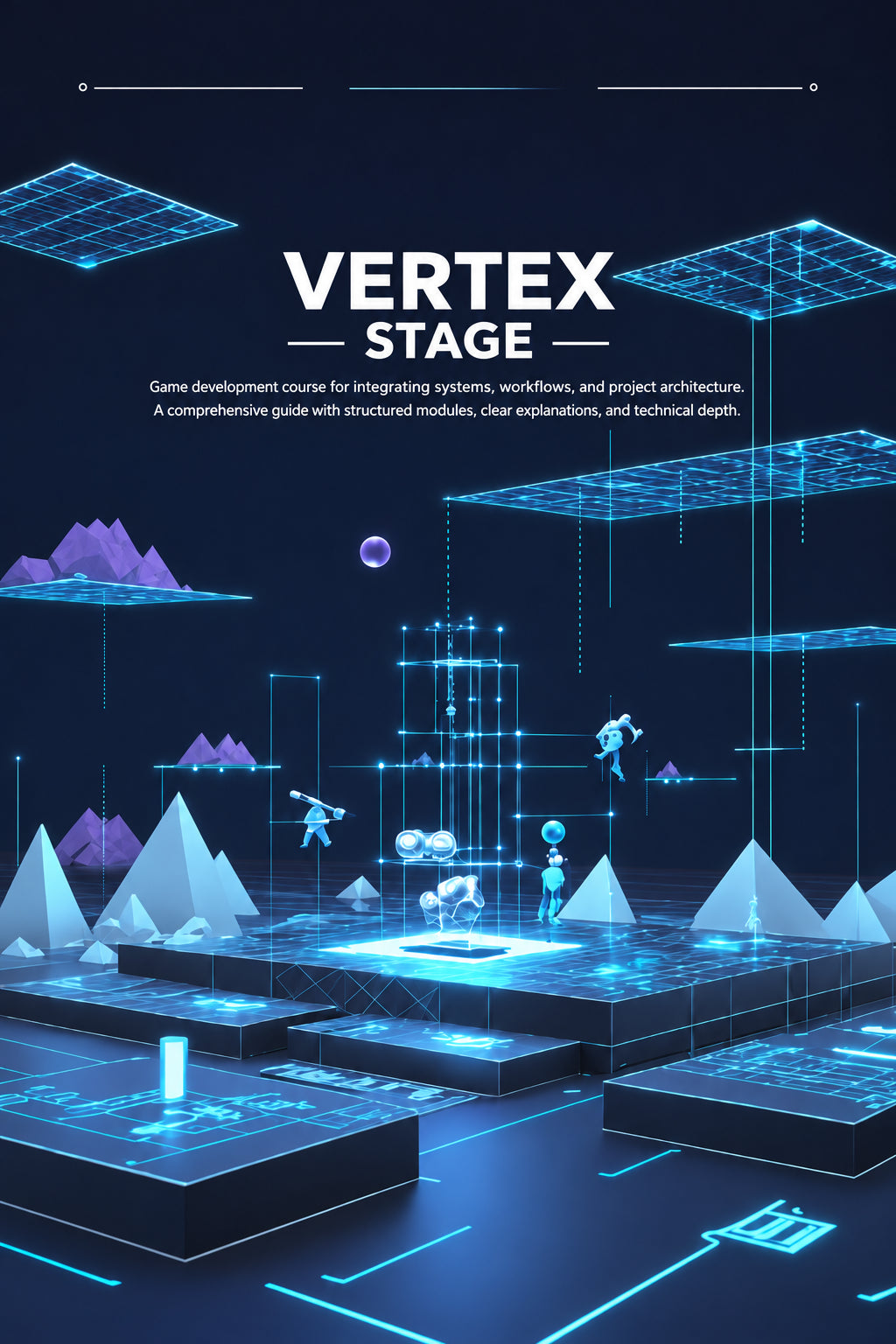
Vertex Stage
Vertex Stage
Couldn't load pickup availability
- ⬇️ Digital file available after purchase
- 🗂️ Long-term availability
- 🔒 Secure checkout
- 🗓️ Content updated in 2026
Self-paced learning overview
Problem Statement
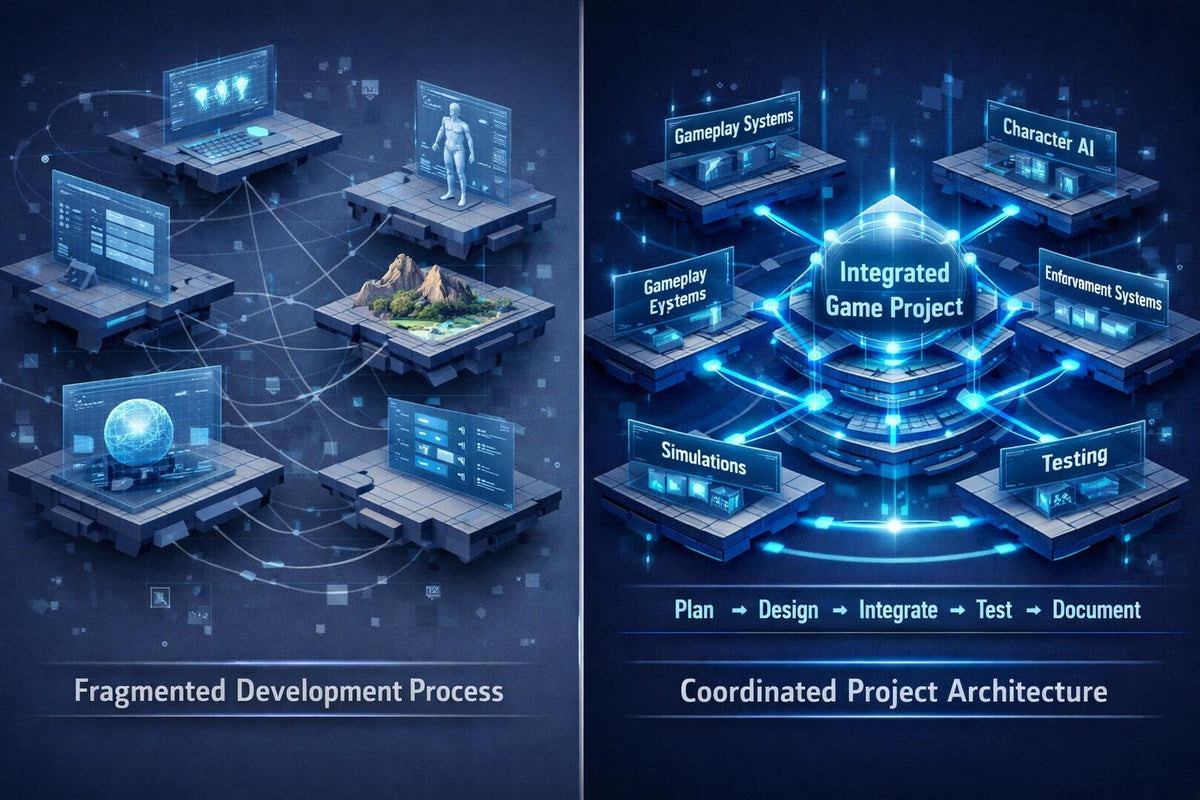
Developing a complete game project requires coordination between technical architecture, gameplay mechanics, interactive environments, and performance requirements. As systems become interconnected, managing dependencies and maintaining consistent behavior becomes increasingly challenging. Changes to individual components may influence several areas of a project. Testing complex interactions also requires structured methods and clear technical documentation. These challenges highlight the importance of integrated development planning and systematic project evaluation.
Solution
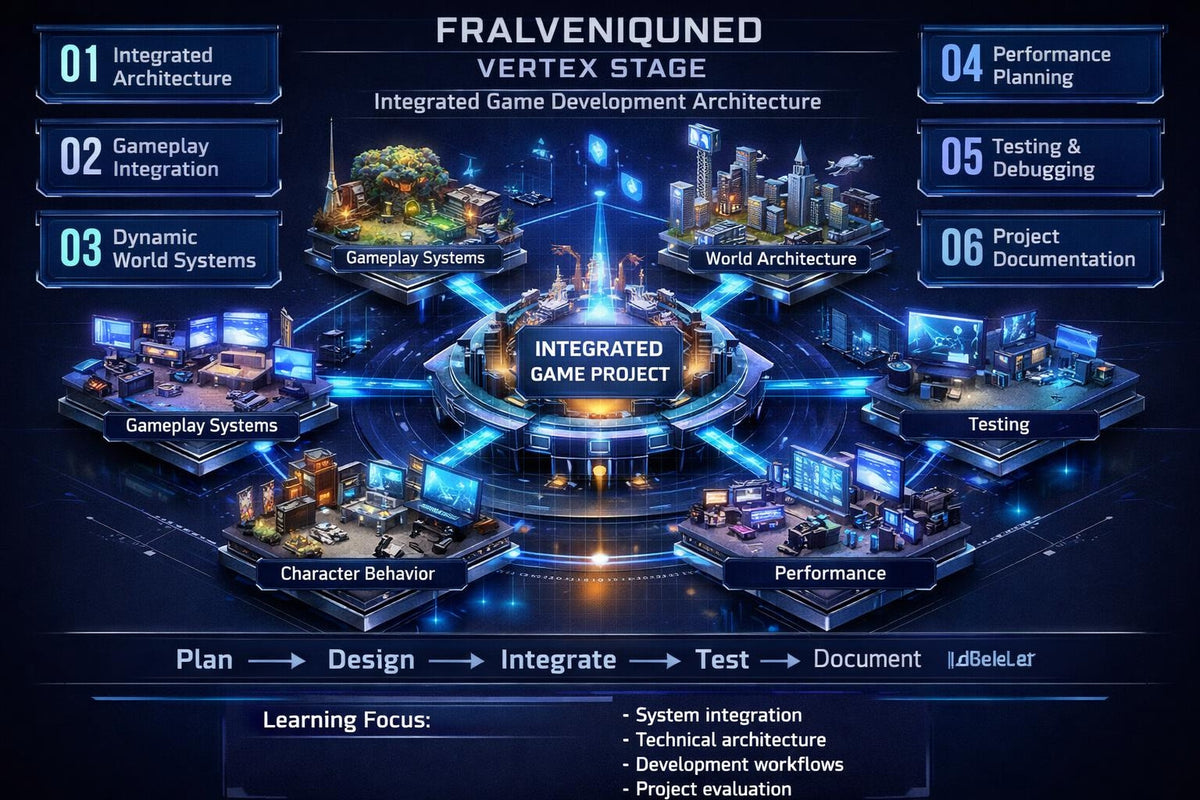
Vertex Stage presents structured methods for combining advanced game development concepts into coordinated project architectures. The course examines system integration, gameplay coordination, performance evaluation, and development workflows. Learners study how technical components communicate and operate within defined architectural boundaries. Practical activities focus on planning integrated systems, evaluating technical decisions, and documenting project structures. The final workshop brings together multiple development disciplines within a unified game project concept.
What's Inside
Module 1 — Integrated Game Architecture
Explore system boundaries, component dependencies, modular structures, and communication between gameplay systems.
Module 2 — Advanced Gameplay Integration
Study the coordination of player mechanics, character behaviors, progression systems, and environmental interactions.
Module 3 — Dynamic World and Simulation Systems
Examine interconnected environments, persistent game states, simulation updates, and coordinated world behavior.
Module 4 — Technical Performance Planning
Explore frame timing, resource allocation, computational workloads, and performance evaluation methods.
Module 5 — Testing and Debugging Complex Systems
Study integration testing, behavior verification, diagnostic methods, and technical issue documentation.
Module 6 — Development Documentation and Project Organization
Examine implementation planning, architectural diagrams, technical records, and project review procedures.
Module 7 — Final Integrated Game Development Workshop
Design a comprehensive game project plan combining gameplay mechanics, interactive environments, character behavior, technical architecture, and testing procedures.
Who Is This For?
Vertex Stage is intended for learners familiar with game development architecture, interactive systems, and technical planning who want to study integrated project development.
What You'll Learn
- Design interconnected game architectures.
- Coordinate advanced gameplay systems.
- Organize dynamic environments and simulations.
- Evaluate technical performance.
- Plan integration testing procedures.
- Document architectural decisions.
- Structure a comprehensive game development project.
Refund and Purchase Information
14-Day Money Back: Eligible refund requests submitted within 14 days of purchase are handled according to the store's published refund policy.
Purchase Information: Review the course contents, digital delivery details, and refund conditions before purchasing.
Certification
The course includes a certificate of completion, providing learners with a record of their participation and completed educational materials. The certificate is not a formal qualification or industry accreditation.
Share
Are these courses suitable for beginners?
Are these courses suitable for beginners?
The collection includes introductory and advanced learning materials. Each tier has its own subject focus and recommended knowledge level. Learners can review the course description to determine which materials align with their current understanding and learning interests.
What topics do Fralveniquned courses cover?
What topics do Fralveniquned courses cover?
Our courses explore different areas of game development, including gameplay mechanics, interactive systems, level design, game logic, project structure, and development workflows. Each tier focuses on a defined collection of topics, combining technical explanations with practical learning activities.