Fralveniquned
Vibe Deck
Vibe Deck
Couldn't load pickup availability
- ⬇️ Digital file available after purchase
- 🗂️ Long-term availability
- 🔒 Secure checkout
- 🗓️ Content updated in 2026
Self-paced learning overview
Problem Statement
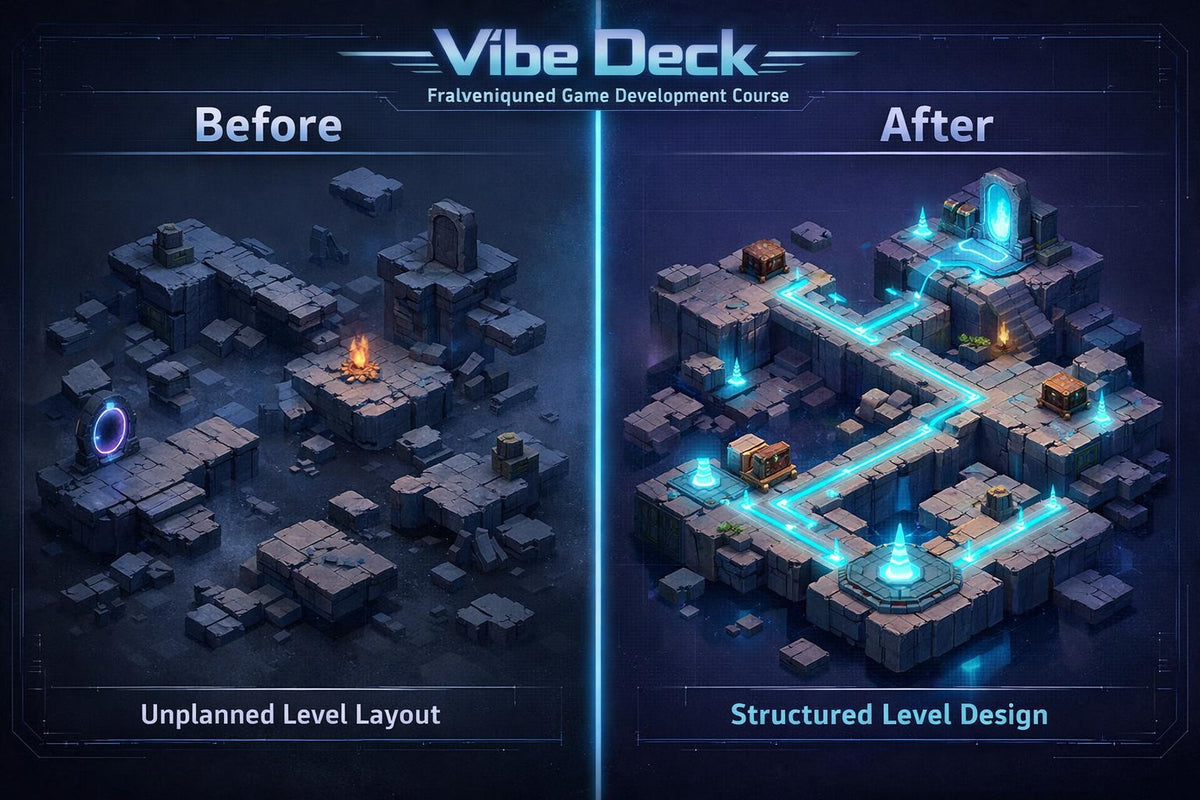
Creating an interactive game environment involves more than arranging visual elements within a scene. Developers must consider navigation, object placement, player movement, and environmental responses. Poorly organized environments can make gameplay objectives difficult to understand. Maintaining consistency between visual design and interactive behavior also requires careful planning. These challenges demonstrate the importance of studying level structure and environmental interaction as connected disciplines.
Solution
Vibe Deck introduces structured methods for planning interactive game environments. The course explains how spatial arrangements influence player movement and gameplay decisions. Learners examine environmental objects, interaction zones, navigation paths, and visual communication. Practical exercises focus on designing simple levels and documenting environmental behavior. The materials connect creative design decisions with technical gameplay requirements.
What's Inside
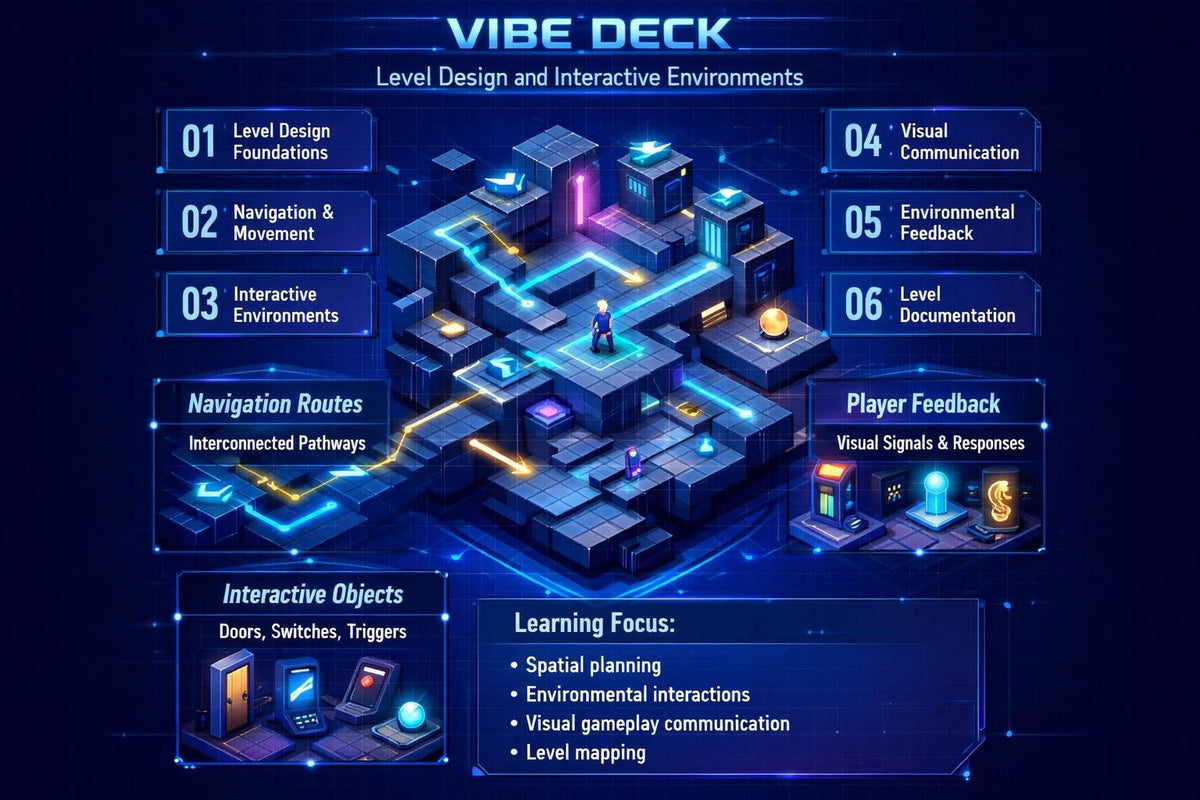
Module 1 — Foundations of Level Design
Explore level structures, spatial organization, player routes, and the relationship between gameplay objectives and environment layouts.
Module 2 — Navigation and Player Movement
Study pathways, obstacles, movement boundaries, and environmental features that influence player navigation.
Module 3 — Interactive Environmental Elements
Examine switches, doors, collectible objects, triggers, and other elements that respond to player actions.
Module 4 — Visual Communication in Gameplay
Understand how lighting, shapes, visual indicators, and environmental details communicate gameplay information.
Module 5 — Environmental Feedback Systems
Explore how interactive environments respond to player decisions through state changes, animation concepts, and visual signals.
Module 6 — Level Planning and Documentation
Create basic level maps, interaction diagrams, and written descriptions of environmental mechanics.
Module 7 — Practical Environment Design Workshop
Plan a small interactive environment containing navigation routes, gameplay objectives, interactive objects, and feedback mechanisms.
Who Is This For?
Vibe Deck is intended for learners who understand introductory game mechanics and want to explore level design and interactive environments. It is suitable for aspiring game designers, creative learners, and individuals interested in the relationship between gameplay systems and spatial design.
What You'll Learn
- Plan structured game environments and level layouts.
- Organize navigation paths and movement boundaries.
- Define interactive environmental objects.
- Connect player actions with environmental responses.
- Apply visual communication principles to gameplay.
- Document level structures and interaction rules.
- Evaluate environmental layouts through practical scenarios.
Guarantee
14-Day Money Back: Eligible refund requests submitted within 14 days of purchase are handled according to the store's published refund policy.
Risk-Free: Review the course description, included materials, and refund conditions before purchasing. Individual learning progress depends on study and practical engagement.
Certification
The course includes a certificate of completion, giving learners a clear way to confirm their progress and document their participation in the educational materials.
Share
Are these courses suitable for beginners?
Are these courses suitable for beginners?
The collection includes introductory and advanced learning materials. Each tier has its own subject focus and recommended knowledge level. Learners can review the course description to determine which materials align with their current understanding and learning interests.
What topics do Fralveniquned courses cover?
What topics do Fralveniquned courses cover?
Our courses explore different areas of game development, including gameplay mechanics, interactive systems, level design, game logic, project structure, and development workflows. Each tier focuses on a defined collection of topics, combining technical explanations with practical learning activities.